
The future of electric performance is being imagined in spectacular fashion, with Tesla’s next-generation Roadster at the center of growing excitement and speculation. Promising a bold vision of extreme acceleration, futuristic engineering, and breathtaking performance, the all-electric supercar has captured the imagination of automotive enthusiasts and technology fans around the world. But amid the excitement, extraordinary claims about upside-down driving, mid-air flips, and seemingly impossible maneuvers raise an important question: Are we witnessing the next evolution of electric supercars, or are these dramatic demonstrations still a vision of what might one day be possible?
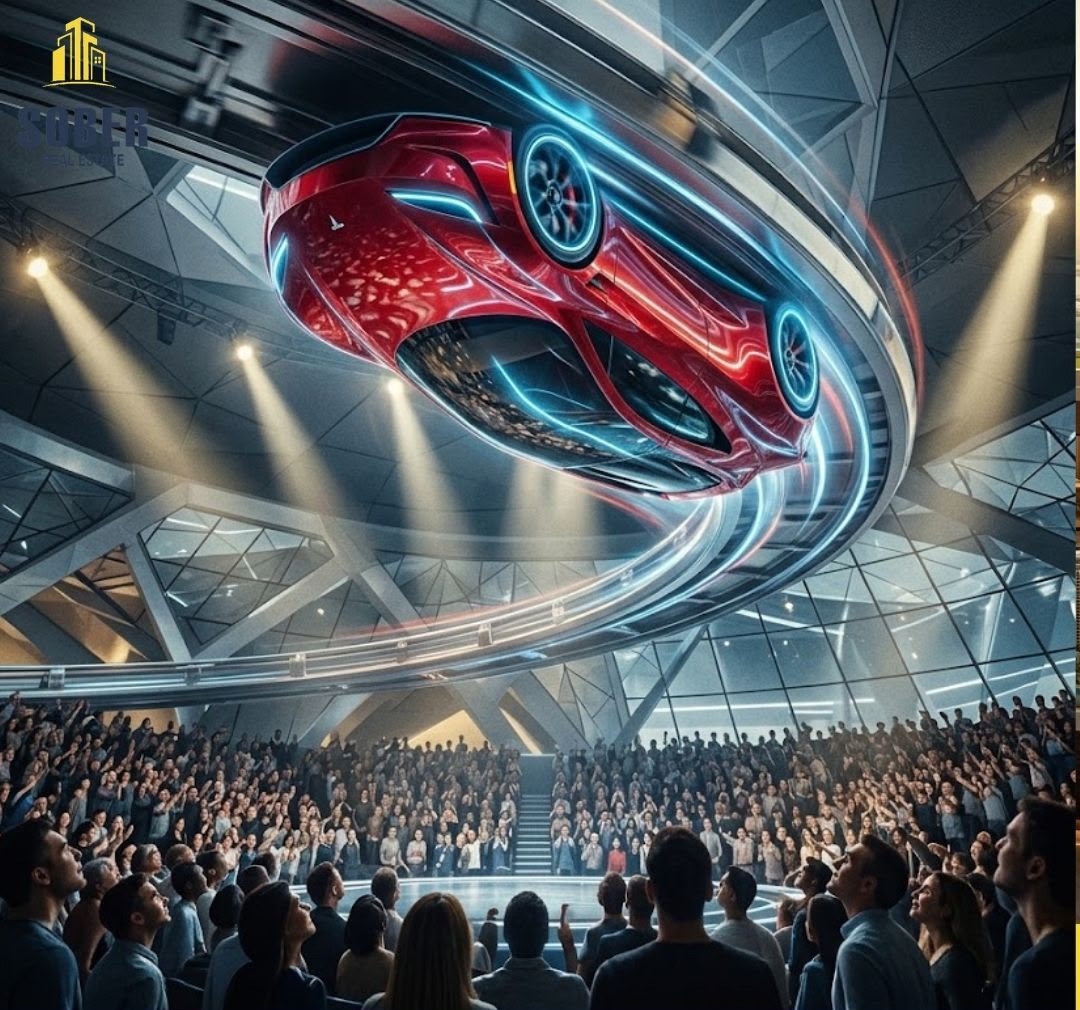
Imagine a sleek, aerodynamic red electric supercar suspended beneath a massive metallic track inside a futuristic demonstration arena. Powerful spotlights sweep across its sculpted bodywork, illuminating glossy red surfaces, precision-engineered contours, and glowing electric-blue accents. Below, an astonished crowd watches as the vehicle appears to defy gravity, creating a cinematic spectacle that blurs the line between automotive engineering and science fiction. The dramatic lighting, reflective metal structures, and high-speed visual effects evoke a world where electric vehicles are capable of feats once considered unimaginable.
The next-generation Roadster has long represented an ambitious vision of electric performance. Its appeal lies in the possibility of combining extraordinary acceleration, advanced electric powertrain technology, cutting-edge vehicle control, and an unmistakably futuristic design. Such a machine could help redefine public expectations of what an electric supercar can achieve. However, there is a crucial distinction between announced performance targets, conceptual visualizations, controlled demonstrations, and independently verified real-world capabilities.
Claims of upside-down driving or mid-air acrobatics deserve particular scrutiny. An ordinary road vehicle cannot simply remain attached to an overhead surface or perform sustained aerial maneuvers without specialized mechanisms, external support, or carefully engineered launch and landing systems. Any demonstration purporting to show these abilities would need to be examined closely to establish how the maneuver was performed, whether the footage depicts a real physical vehicle, and whether visual effects, concealed support systems, or other experimental technologies were involved.
That is why official footage matters. Before accepting extraordinary demonstrations as evidence of a breakthrough, viewers should look for original video published by Tesla or an identifiable event organizer, a clear explanation of the technology involved, continuous footage showing the full maneuver, and credible independent reporting that corroborates what is being shown. Even official promotional footage should be interpreted carefully: it can establish what a company presents, but it does not automatically verify every technical claim or prove that a feature is commercially available.
If these kinds of extreme maneuvers were ever demonstrated using a production-intended electric supercar, the implications could extend beyond spectacle. They would raise fascinating questions about vehicle dynamics, traction, structural engineering, power delivery, active control systems, safety constraints, and the limits of conventional automotive design. Yet practical road performance, driver protection, reliability, and repeatability would remain just as important as headline-grabbing stunts.
For now, the most compelling way to view the upside-down Roadster scenario is as a conceptual vision of next-generation automotive technology rather than confirmed evidence of a real-world achievement. The dramatic image of a red electric supercar hanging beneath a futuristic track captures the spirit of innovation and ambition, but the visual spectacle itself should not be mistaken for proof that the maneuver has actually taken place.
Is this the future of electric supercars? Potentially, it represents the kind of extraordinary engineering vision that fuels the imagination. But until the specific claims are supported by authentic footage, transparent technical explanations, and independent verification, the distinction between possibility and proven performance remains essential.
The next chapter in electric mobility may indeed deliver astonishing breakthroughs. The real story, however, will not be defined by the most unbelievable image or the boldest headline. It will be defined by what engineers can demonstrate, what evidence can verify, and what technology can reliably achieve in the real world.



Join The Discussion